LED Billboard Advertising in India: What It Costs and Where It Works
LED billboards are the fastest-growing format in Indian outdoor advertising. Walk through any metro's commercial district, a premium mall, or a busy airport, and the static printed hoarding now shares the skyline with a bright digital screen cycling through ten brands a minute. For advertisers, that shift changes almost everything: how the creative is made, how the slot is bought, and how the campaign is measured.
This guide explains what an LED billboard actually is, where it performs in India, the formats available, and the factors that drive the cost, so you can decide whether digital is right for your brand before you enquire.
What is an LED billboard?
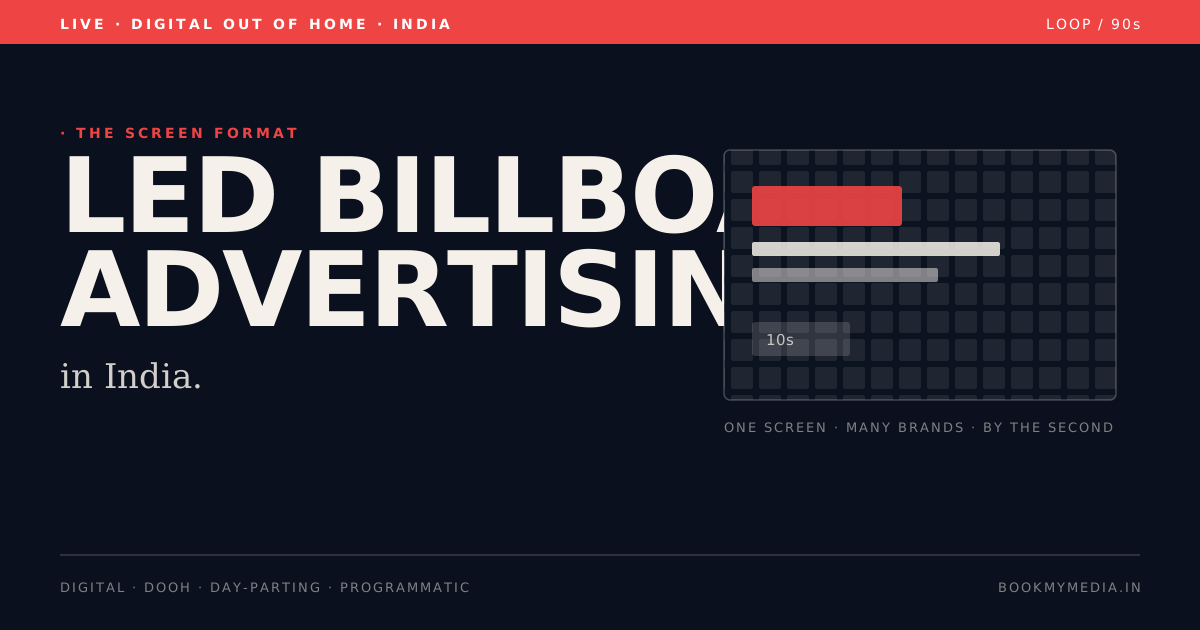
An LED billboard (also called a digital billboard, an LED display screen, or a DOOH unit) is a large outdoor screen that displays video or still creative, instead of a printed flex sheet stretched over a frame. The screen is built from thousands of light-emitting diodes, which is why it stays bright and readable in direct sun and at night.
The practical difference from a traditional hoarding is that the creative is software, not print. A single screen runs a loop shared between several advertisers, each getting a slot of a few seconds that repeats through the day. You can change the creative instantly, run different messages at different times, and share the same screen with other brands at a lower entry cost than buying a whole hoarding outright.
LED billboard vs a traditional hoarding
Both formats earn their place. The right choice depends on what your campaign needs to do.
| Factor | LED / digital billboard | Static hoarding | |---|---|---| | Creative | Video or animated, changeable instantly | One printed visual for the booking period | | Cost model | Per slot in a shared loop | Whole site rented per month | | Day-parting | Yes (different ads by time of day) | No | | Entry cost | Lower (shared screen) | Higher (full site) | | Best for | Launches, offers, short bursts, premium presence | Sustained always-on brand awareness | | Measurement | Play-out logs + impression modelling | Traffic and footfall estimates |
In practice many brands combine the two: static hoardings for steady, all-day brand recall, and LED screens for the launch week, the festive offer, or the premium landmark moment. For a fuller comparison of OOH formats, see our guide to unipoles, hoardings and billboards.
Where LED billboards work best in India
Digital screens reward two things: high footfall and dwell time. They perform best where people are stopped or slowed down long enough to watch a few seconds of motion.
- Commercial and business districts: Lower Parel and BKC in Mumbai, Connaught Place and Nehru Place in Delhi, MG Road and the Outer Ring Road tech corridor in Bangalore, HITEC City in Hyderabad.
- Premium malls and high streets: indoor and facade LED reaching a captive, higher-spend audience.
- Transit hubs and airports: long dwell time makes digital especially effective.
- Congested highway junctions and flyovers: where traffic slows, a bright screen out-performs a static panel.
You can browse live screen and hoarding inventory by city on the BookMyMedia site explorer, or jump straight to a market like outdoor advertising in Mumbai or Delhi.
LED billboard formats in India
"LED billboard" covers several distinct formats, each suited to a different brief:
- Roadside LED screens and digital unipoles: large facade or pole-mounted screens on arterial roads and highways, built for distance viewing at vehicle speed.
- Mall and indoor LED: facade screens outside malls plus indoor screens near atriums, food courts and entries, reaching shoppers in a buying mindset.
- Transit LED: screens at metro stations, bus terminals and airports, where dwell time is high.
- Gantry and landmark LED: signature screens at city landmarks that anchor a premium campaign.
- Programmatic DOOH: networks of screens bought through a platform, with audience-led targeting and automated play-out reporting.
For a full overview of digital out-of-home options and how they fit a media plan, see our DOOH advertising hub.
What drives LED billboard advertising cost in India
LED is priced differently from a printed hoarding. Instead of renting a whole site per month, you buy a slot in a loop: for example a 10-second spot in a 90-second loop, repeating through the day. Your share of voice (how often your ad plays) is the main lever on price.
The factors that move the cost are:
- Location and footfall: a premium metro landmark screen costs far more than a screen on a quieter stretch.
- Screen size and resolution: larger, higher-resolution screens command higher rates.
- Slot length and loop share: a longer slot, or more frequent repeats, raises the price.
- Day-parting: premium time bands (evening rush, weekends) can be priced higher.
- Campaign duration: longer runs usually improve the effective rate.
- Production: video creative costs more to produce than a single static visual, though there is no printing or mounting cost.
Because rates vary so widely by screen and city, we do not publish fixed prices. For indicative range bands across formats and city tiers, read our hoarding and outdoor advertising cost guide. For a specific number, share your target cities, screen preferences and duration through the enquiry form and our team responds within 24 hours.
How LED and DOOH campaigns are measured
A major reason brands move budget to digital is measurement. Static OOH is estimated from traffic and footfall data; digital adds play-out logs that confirm exactly how many times your creative ran, on which screen, and when. Layered with impression modelling and, on programmatic networks, audience data, this gives a far clearer read on delivery than traditional OOH, and makes optimisation mid-campaign possible.
How to book LED billboard advertising in India
The process is straightforward:
- Shortlist screens by city and location, and decide between roadside, mall, transit or programmatic.
- Choose your slot length and loop share to set your share of voice.
- Prepare creative to the screen's resolution and duration specs (our team confirms the exact specs per screen).
- Schedule and go live, with day-parting if it suits the campaign.
- Review play-out reporting and adjust if needed.
BookMyMedia handles screen sourcing, scheduling, creative specs and reporting end to end. Browse available inventory or request a quote to get started.
Frequently Asked Questions
Is an LED billboard the same as a digital billboard?
Yes. In India the terms LED billboard, digital billboard, LED display screen and DOOH unit are used interchangeably for the same thing: a large outdoor screen that plays video or still creative instead of a printed sheet. The only real distinction is technical (the display is built from LEDs), and it does not change how you buy or run a campaign.
How much does LED billboard advertising cost in India?
It depends on the screen's location and footfall, its size and resolution, your slot length and how often it repeats in the loop, any day-parting, and the campaign duration. Unlike a static hoarding you do not rent the whole site, you buy a share of a shared loop, so a smaller budget can still secure a premium screen. We do not publish fixed rates; share your brief through the enquiry form for a precise quote.
What creative format do LED billboards need?
Most screens accept a short video (commonly 6 to 15 seconds) or a high-resolution still, exported to the screen's exact pixel dimensions and aspect ratio. Keep the message to one idea and the branding large, since viewers see each play for only a few seconds. Our team confirms the precise file specs for each screen you book.
Are LED billboards better than printed hoardings?
Neither is strictly better; they do different jobs. LED suits launches, time-bound offers, day-parted messaging and premium landmark presence, and it lets you change creative instantly. Static hoardings are more cost-effective for sustained, always-on brand awareness. Many campaigns use both: static for steady recall and LED for the high-impact moment.
Where can I run LED billboard ads in India?
Digital screens are concentrated in metro commercial districts, premium malls, transit hubs and airports, and at congested highway junctions, with growing coverage in Tier 2 cities. Browse what is available by city on the site explorer, or tell us your target markets and we will recommend screens that fit.
Can I change my creative during the campaign?
Yes, and this is one of the biggest advantages of digital. Because the creative is software rather than print, you can swap it instantly at no reprint cost, run different messages by time of day, or react to an event mid-campaign.
For maximum impact, pair LED billboards with integrated digital marketing services that drive search and social engagement while your screens capture attention in the physical world.
Ready to plan a digital campaign? Browse LED and digital inventory, or request a custom quote and we will put together a screen plan for your cities and budget.