Bus Advertising in India: Formats, Costs and How to Book
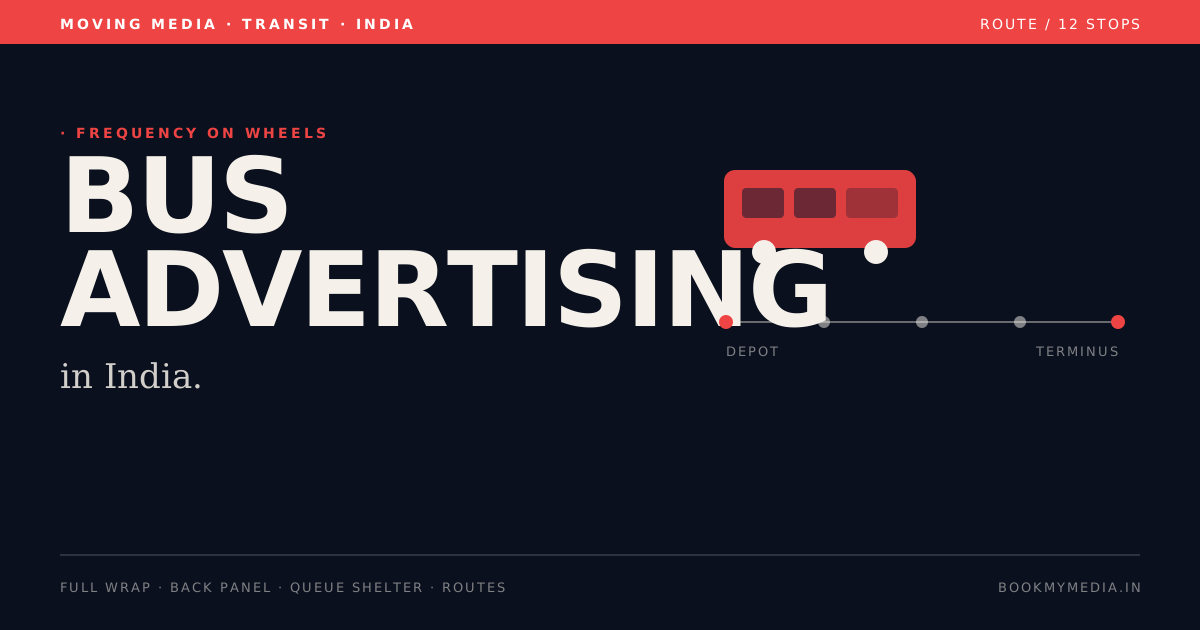
A bus runs the same busy route a dozen times a day, past markets, junctions, offices and bus stops, in front of pedestrians, commuters and other vehicles. That repetition is what makes bus advertising one of the most cost-effective transit formats in India: high frequency, street-level reach, and a presence that moves through exactly the areas your customers live and shop in.
This guide covers the formats available, where bus advertising performs, what drives the cost, and how to plan a campaign.
What is bus advertising?
Bus advertising is brand messaging placed on or around public and private buses, and on the bus shelters where people wait. It is part of the wider transit media category, and it works on two principles: mobility (the bus carries your brand across the city) and frequency (the same audience sees the same route repeatedly).
Unlike a fixed hoarding, a fleet of buses spreads your message across many roads at once, which makes it a strong choice for mass-reach campaigns and for building quick awareness in a new market.
Bus advertising formats in India
There are two broad families: branding on the bus itself, and branding at the bus shelter.
On the bus:
- Full bus wrap: the entire exterior is branded, including windows on some formats. The highest-impact option.
- Half wrap: the lower half of the bus body, a popular balance of impact and cost.
- Back panel: the rear of the bus, seen by every vehicle and pedestrian behind it in traffic. Strong for recall.
- Side panels (king size and super king size): large rectangular panels along the body.
- Inside-bus branding: panels, ceiling cards and handle grips that reach seated commuters during the journey.
At the stop:
- Bus shelter and queue shelter advertising: static backlit or non-lit panels at bus stops, reaching waiting commuters with longer dwell time, plus passing road traffic.
Where bus advertising works best
Bus advertising rewards dense, repetitive routes:
- High-frequency commuter corridors connecting residential areas to business and retail districts.
- IT and industrial corridors where large workforces travel fixed routes daily.
- Tier 2 and Tier 3 cities, where a modest fleet can dominate share of voice for a fraction of metro costs.
- College, market and station areas, where bus shelters catch high pedestrian footfall.
You can see the inventory available across markets on the BookMyMedia site explorer, and read our broader transit advertising overview for how bus media fits alongside metro, auto and other formats.
Who bus advertising is for
It suits brands that need broad, frequent reach rather than a single landmark moment: FMCG, retail and supermarket chains, telecom and apps, education and coaching, local service businesses, and brands launching in a new city. The combination of low entry cost and high repetition makes it especially effective for app installs and offer-led campaigns.
Bus advertising vs hoardings
| Factor | Bus advertising | Static hoarding | |---|---|---| | Coverage | Mobile, many roads | Fixed landmark | | Strength | Frequency and reach | Always-on at one high-traffic point | | Entry cost | Lower per unit | Higher per site | | Best for | Mass awareness, launches | Sustained presence at a key location |
Most strong campaigns pair the two: a few landmark hoardings for anchor presence, and a bus fleet for frequency across the city.
What drives bus advertising cost in India
Bus formats are usually priced per bus per month (for panels) or per fleet for wraps, with separate production costs for printing and mounting. The factors that move the price are:
- Format: a full wrap costs far more than a back panel.
- City and routes: metro routes cost more than Tier 2 routes.
- Fleet size: larger fleets improve the effective rate but raise the total.
- Duration: wraps usually have a three-month minimum; longer runs improve value.
- Shelter location: premium high-footfall stops cost more than residential ones.
We do not publish fixed rates. For indicative range bands across formats and city tiers, see our outdoor advertising cost guide, and share your target cities and format through the enquiry form for a precise quote within 24 hours.
How to book bus advertising in India
- Choose your format (wrap, panel, or shelter) and whether you want a fleet or specific routes.
- Select cities and routes that match where your audience travels.
- Prepare creative to the format's dimensions; our team confirms specs per format.
- Print, wrap and install, which BookMyMedia manages end to end.
- Go live and monitor, with photographic proof of installation.
Browse inventory or request a quote to start.
Frequently Asked Questions
What is the difference between bus advertising and bus shelter advertising?
Bus advertising brands the vehicle itself (a wrap or panel that travels the route), so it is mobile and builds frequency across the city. Bus shelter advertising is a static panel at the stop where people wait, so it has longer dwell time and catches both waiting commuters and passing road traffic. Many campaigns use both together along the same corridor.
How much does bus advertising cost in India?
It depends on the format (a full wrap costs much more than a back panel), the city and routes, the size of the fleet, and the campaign duration, plus separate printing and mounting costs. Panels are typically priced per bus per month. We do not publish fixed rates; share your brief for a precise quote.
Which bus advertising format gives the best ROI?
For pure recall on a tight budget, back panels are hard to beat, since every vehicle and pedestrian behind the bus sees them. For maximum impact and brand presence, full and half wraps perform best. Bus shelters add dwell time at key stops. The right mix depends on whether your goal is frequency, impact, or both.
Can I target specific routes or areas?
Yes. Buses run fixed routes, so you can choose corridors that pass your target neighbourhoods, colleges, markets or office districts. Shelters can be selected at specific high-footfall stops. Tell us the areas you want to reach and we will recommend routes and stops.
Do you handle printing and installation?
Yes. BookMyMedia manages creative adaptation, printing, wrapping or panel mounting, installation and photographic proof for bus and shelter campaigns. Most brands share their brand assets and we handle production end to end.
How long does a bus advertising campaign run?
Exterior wraps and panels usually have a minimum of three months, since installation involves printing and fitting. Bus shelter bookings are more flexible and can run monthly. Longer commitments generally improve the effective rate.
Ready to put your brand on the move? Explore transit and bus inventory, or request a custom quote and we will build a route and fleet plan for your cities and budget.